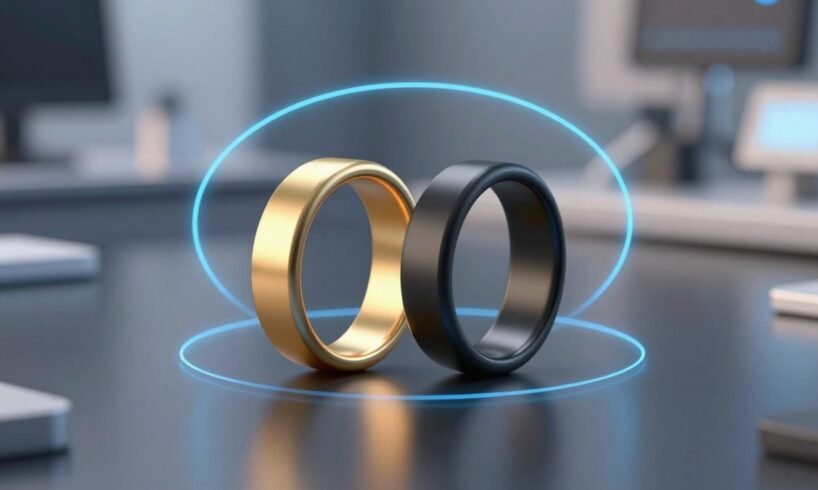
Oura has filed a new patent lawsuit against Ultrahuman, asking a federal court in Texas to stop the Indian company from selling its Ring Pro in the United States. The complaint, filed Thursday in the Eastern District of Texas, also names SVTronics, the Texas manufacturer that builds the Ring Pro in Plano.
The Oura Ultrahuman lawsuit is the latest round in a dispute that began in 2023 and already pushed Ultrahuman’s earlier Ring Air off the US market. It arrives months after a customs ruling let the redesigned Ring Pro back in, setting up a test of whether a new design can escape the reach of older patents.
What the Oura Ultrahuman lawsuit alleges
Oura says the Ring Pro infringes two patents: D804,471, a design patent, and 12,769,363, a utility patent covering internal parts including a curved power cell, a circuit board, magnets and optical sensors. The utility patent was issued Oct. 20, two days before Oura filed the complaint. Oura wants cash damages and a court order that would block US sales.
SVTronics is accused of making the device under Ultrahuman’s direction. Oura says both companies infringe through manufacture, import and sale. “A redesign that keeps the core intact is still a variation on someone else’s work,” Oura wrote in a blog post announcing the filing.
Mohit Kumar, Ultrahuman’s co-founder and chief executive, told TechCrunch that the company would fight the claims. He noted that no court order currently affects the Ring Pro and that the device is still available to US buyers. The allegations have not been tested in court.
Why the Ring Pro is back in court
The timeline explains the stakes. Oura sued Ultrahuman in 2023 over the Ring Air. In August 2025, the US International Trade Commission found infringement and barred imports of that model. Ultrahuman redesigned the hardware as the Ring Pro, launched it in February and won clearance from US Customs and Border Protection in March. Oura argues that the customs decision addressed the patent from the earlier case, not the two patents in the new suit.
The new utility patent is unusually fresh. Oura received it shortly before filing, a sequence that gives the company a new legal theory even after customs cleared the product. Patent holders can sue on newly issued claims, but they still have to prove the product infringes and that the patent itself is valid.
The market is growing. IDC expects smart ring shipments to reach 4.9 million units this year, up 12.8%, and about 6.3 million by 2030, TechCrunch reported. Oura is the best-known brand; Ultrahuman, Samsung, RingConn and others are trying to take share. Oura has sued several of them, and RingConn and Circular have signed licensing deals.
What it means for smart ring buyers
For now, nothing changes at checkout. The Ring Pro is still on sale, and Oura’s request for an injunction is just that, a request. A ruling could take months. If Oura wins, Ultrahuman would lose its US foothold for a second time. If Ultrahuman wins, the case would validate its redesign strategy.
The dispute also matters beyond these two companies. It shows how patent portfolios can shape competition in wearable health monitoring, where small design and sensor changes are hard to separate from earlier inventions. It also adds legal cost to a category with thin margins and subscription battles.
Oura’s timing is notable. The company shelved a $2.2 billion IPO in September, citing market uncertainty, and continues to expand its ring lineup. Ultrahuman raised $70 million in September with backing from Qualcomm Ventures and Labcorp, valuing it at about $365 million. Both sides can afford a fight, which makes a quick settlement less likely.
The case will turn on technical details: which components the new patent covers, whether the Ring Pro uses them, and whether the patent should have been granted. For buyers, the practical question is whether the Ring Pro stays available in the US long enough to matter.

Searching for new things, she has found herself as a writer. In the midst of day to day routine life, she finds her peace in reading and painting. With a passion for reading, she believes in learning new things to add value to her own as well as to the lives of others around her.