OpenAI plans to buy artificial intelligence chips from Google. Google is the company it competes against most directly, for search users, chatbot users and cloud contracts. The Information reported an OpenAI Google TPU purchase in planning on Tuesday, citing a person familiar with the matter. Meanwhile, Bloomberg reported it separately, describing the intent as part of OpenAI’s effort to expand its computing build-out. No price, no volume and no delivery schedule is public, and neither company has commented.
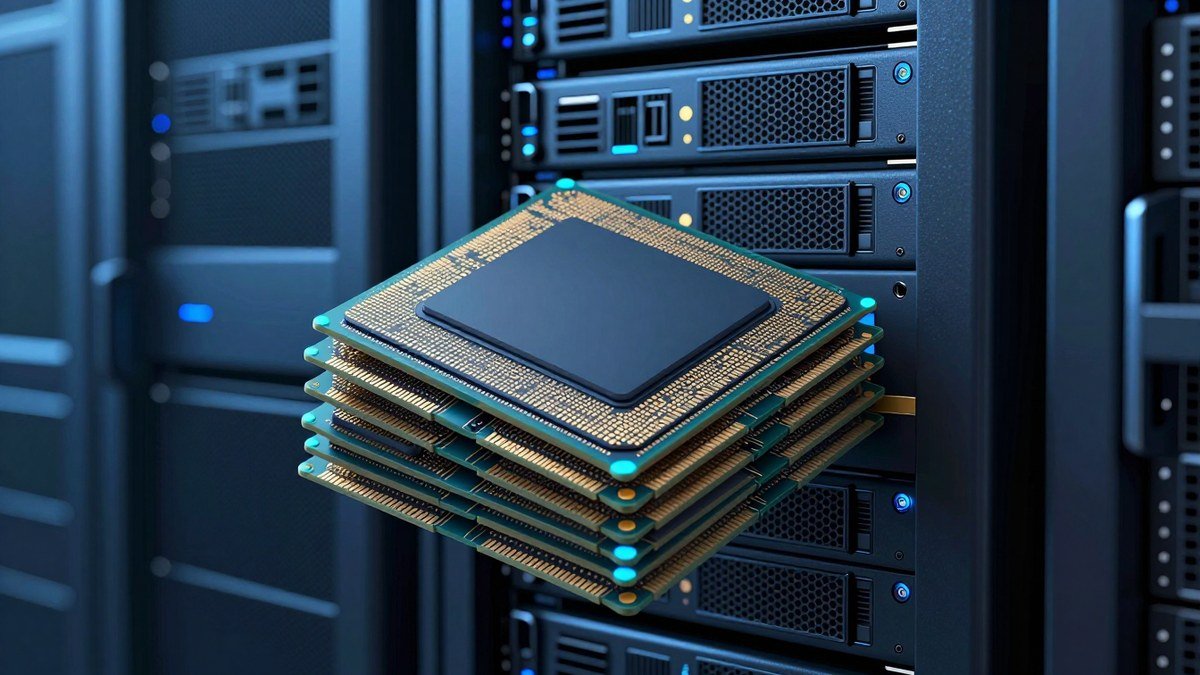
TPUs, or tensor processing units, are the custom accelerators Google built to run its own AI services. For years they were reserved almost entirely for internal use. OpenAI began renting spare TPU capacity through Google Cloud in mid-2025 to help cut inference costs. Inference cost here is the recurring expense of generating answers at scale. OpenAI hoped rented TPUs would lower that cost, as Reuters covered at the time. Buying chips outright is a different arrangement. A purchase replaces an hourly cloud bill with a large upfront payment. It also puts hardware in data centers OpenAI controls or leases, instead of capacity Google prices and provisions itself.
What the reports say and what they leave out
Both reports rest on unnamed sourcing. The Information’s headline calls OpenAI “a longtime Nvidia customer” that plans to buy Google’s AI chips. Similarly, Bloomberg describes the move as part of a wider push to expand OpenAI’s AI infrastructure. Neither outlet names a price, a chip count, a delivery window or which TPU generation would ship. The accurate status of the OpenAI Google TPU purchase right now is a reported plan, not an agreed deal.
The ownership question is what makes the choice notable. By contrast with a rental, a purchase moves the silicon to the buyer. The buyer takes on the capital expense in exchange for control over placement, utilization and hardware lifespan. Moreover, chips serving OpenAI’s workloads inside OpenAI’s own footprint would loosen the company’s dependence on any single computing supplier. ChatGPT’s everyday traffic would, in principle, rest on hardware OpenAI owns outright.
Why an OpenAI Google TPU purchase fits the moment
The report arrived the same day Google’s chip business opened another door. Oracle announced on Tuesday that it will deepen its AI chip tie-up with Nvidia. It will also start offering accelerators from Google and Cerebras Systems alongside it, according to Reuters. In addition, hosting Google’s in-house chips in another major cloud operator’s data centers is a comparatively new step for the company. Google kept that silicon tightly to itself until recently.
There is also a working commercial relationship to build on, awkward as that sounds. On October 21, OpenAI announced that its frontier models would become available in Google Cloud’s Model Garden. Codex, its coding agent, was included, with general availability planned within weeks. OpenAI also stated that Microsoft remains its primary cloud partner. At the same time, the two companies do business as clouds while competing as model vendors. A reported OpenAI Google TPU purchase would extend that pattern from software into hardware.
The infrastructure push also fits OpenAI’s fundraising context. Funding-round talks for OpenAI now reportedly target a $30 billion raise at a $1.25 trillion valuation.
Additionally, cost is the likely arithmetic behind it. Inference carries a per-token price, and a small slice of each request adds up over enormous volumes. Minor efficiency gains therefore compound. For example, The Information reported in June 2025 that OpenAI hoped rented TPUs would lower inference costs. A purchase would pursue the same goal with far more commitment attached.
What to watch
- Confirmation. Neither OpenAI nor Alphabet has said anything publicly. Instead, the first signal will be a statement or a deal announcement that supersedes the anonymous reports.
- Terms. A public OpenAI Google TPU purchase price would set the first benchmark for TPUs sold outside Google’s own cloud. As a result, other buyers would have a figure to price against.
- Chip specification. Which TPU generation ships is one open question. Whether the hardware would handle training, inference or both is another. Each shapes the practical value of the plan.
A confirmed OpenAI Google TPU purchase with terms would set the first public price for Google’s accelerators outside Google’s cloud. From that day on, every other buyer negotiating multi-year compute deals would be pricing against that number.

Brian Shannon is just getting his start a reporter. He attended a technical school while still in high school where he learned a variety of skills, from photography to car mechanics. Brian also helps keep Techno Secrets social media feeds up-to-date.